There’s just something special about bubbles. They catch the light, reflect rainbow colors, float like magic, and then for what appears to be no reason, pop! It’s as if they were never there in the first place. Like winter snowflakes, every single one is different—and they never stop being fun.
Monkey Buddies Fun Fridays have had a few good bubble days this summer. What started as simply fun engagement, and an excuse to use my super cool bubble wands, turned into some mighty science
A bottle of dish soap and water, a wand, and a lot of running and yelling in the backyard became an excuse for a science lesson—but do we ever need an excuse?
Along with the excitement and play, came the inevitable questions:
- “Why do they pop so fast?”
- “Can we make GIANT ones?”
- “Can we make ones we can catch?”
That’s when I brought up doing some bubble science. I had to laugh at the reaction the kids had this last week knowing that with bubbles, came science. “Nooooooo. Can’t we just play?”
I almost caved but I have had a rule since the beginning of summer that Fun Fridays have at least one intentionally academic lesson. The rest is play and learning through play. “Bubbles are play,” I told them. “Last week we talked about them also being science and today we are learning why.” Ms. Chrissi put her foot down. I rarely do that on Fridays, since I like to maintain a child-led vibe.
“Five minutes of experimenting.” I said. “That’s all. Then you can go back to what you were doing.”
Needless to say, they never went back.
🧪 Backyard Bubble Lab
We tried three different mixes (recipes and science lab info are linked below):
- Dawn and water
- Dawn, water, and glycerin (the secret ingredient)
- Dawn, water, and sugar
The difference between the three? HUGE.
The Dawn and water solution was a little stronger because we wanted our constant. The glycerin, and the sugar became our variables. Normally I would have the children doing the mixing, but since the bubble mixes needed to rest for at least an hour, I mixed them while the children were doing other activities with my assistant.
After lunch we assembled for the “science” part of the day.
I had three trays of bubbles in front of me. Each using one of the above combinations. I showed them the ingredients.
The sugar. “Can we taste it?” Yup, everyone tasted the sugar with their finger.
The glycerine. Me: “It is made up of oils but it isn’t greasy. The oils are converted to sugar alcohol and it is water soluble.” (Vocab word.)
Everyone wanted to feel it so they all got a drop on their finger. “Can we taste it?” Ummmm… I guess? Fingers were licked (I tasted it too.) It was a little sweet. No one died.
The next part was for each child to choose a bubble wand from my amazing assortment of wands. Check out the Amazon link at the end of this blog. I have had these wands for going on three years. They are sturdy and they are FUN. Birthday party fun.
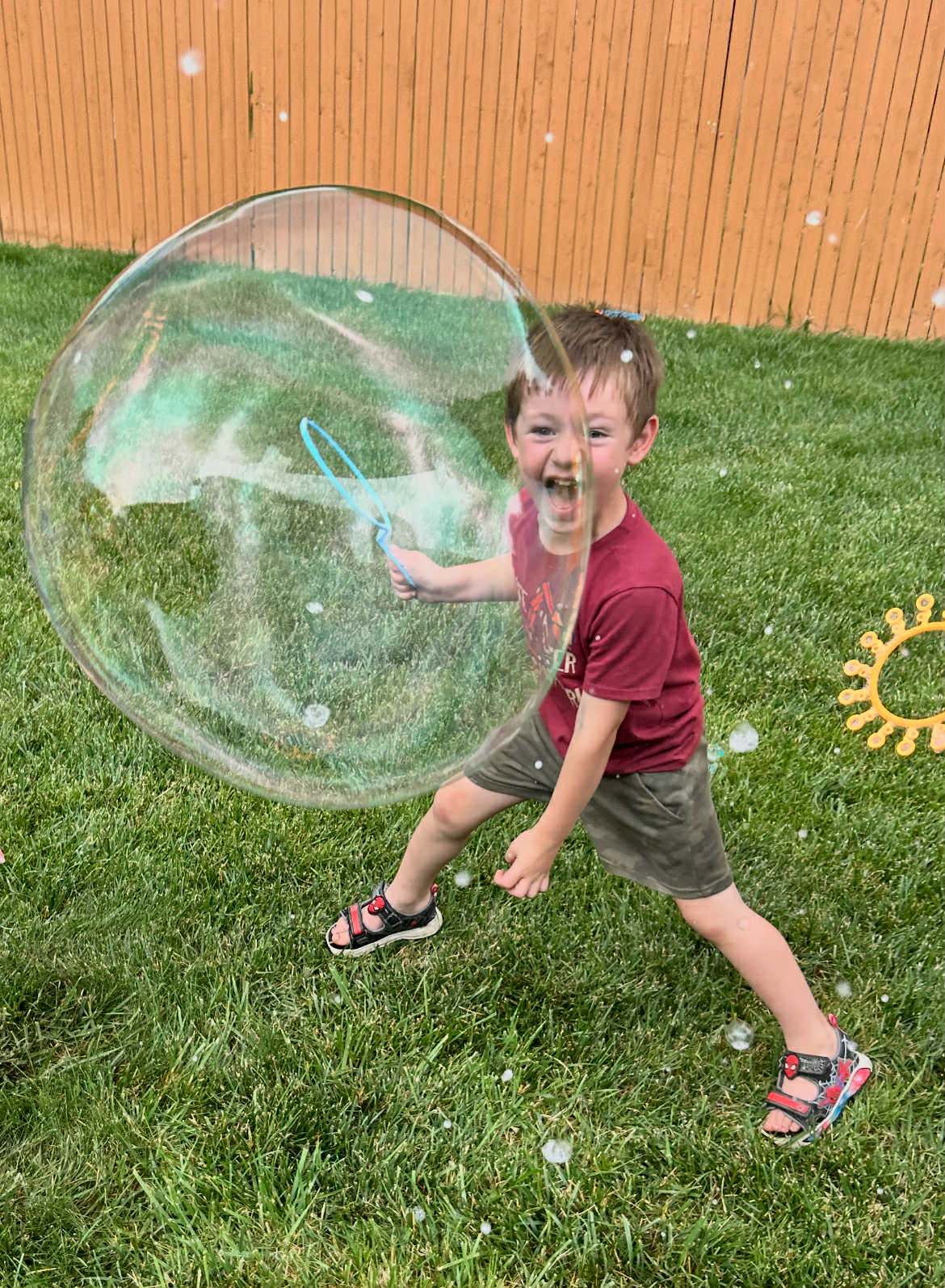
We lined up at the containers with the bubble potions, and the children tried one of each. Immediately glycerine was the top favorite. Huge, beautiful rainbow shimmery bubbles were a hit. Sugar came in a close second, and our plain mixture, it eventually got split between the other containers.
The bubbles were indeed amazing. The kids forgot we were doing science. They forgot about the games they were playing before science. We made bubbles and danced in circles. We caught bubbles on our wands. We chased them floating through the yard. Some even landed on the grass without popping.
We talked about surface tension, how soap makes the water stretchy, and how glycerin draws moisture from the air and slows down evaporation so the bubble lasts longer. I kept it simple, but they were into it. Once they saw those mega-bubbles floating through the air, they were hooked.
💭 What We Learned (Besides “Bigger is Better”)
Turns out, science feels a lot more like play when the results are this cool. And sometimes kids don’t think they want the learning part. However, as educators, (I am looking at you, too, family members) turning the learning into something that results in this level of engagement, is key to remembering what we learned.
Bubbles became one of our best science activities this summer. They are also one of my favorite memory-makers.
🧼 Super Bubbles Recipe
Bigger, better bubbles:
- 6 cups water
- 1 cup Dawn dish soap
- 1/4 cup glycerin
Stir gently so we don’t make bubbles in the water. Let it rest for at least an hour. Overnight is even better.
✨ Free Printable: Bubble Science Fun Sheet!
Want to try this at home or in your classroom? Download our free Monkey Buddies Bubble Science Fun Sheet. It includes:
- A simple recipe
- A kid-friendly explanation of the science
- A space to draw and record bubble results
- A A “Monkey Buddies Bubble Science Certificate”
👉 Click here to download the printable PDF and cute Bubble Master Certificate.
👉 Click here for my favorite bubble wands from Amazon.
Have you tried backyard science like this before? Tell me what worked—or what flopped!—in the comments below. I hope you enjoy your bubbles!
 Chrissi Dennis and Monkey Buddies
Leave a comment