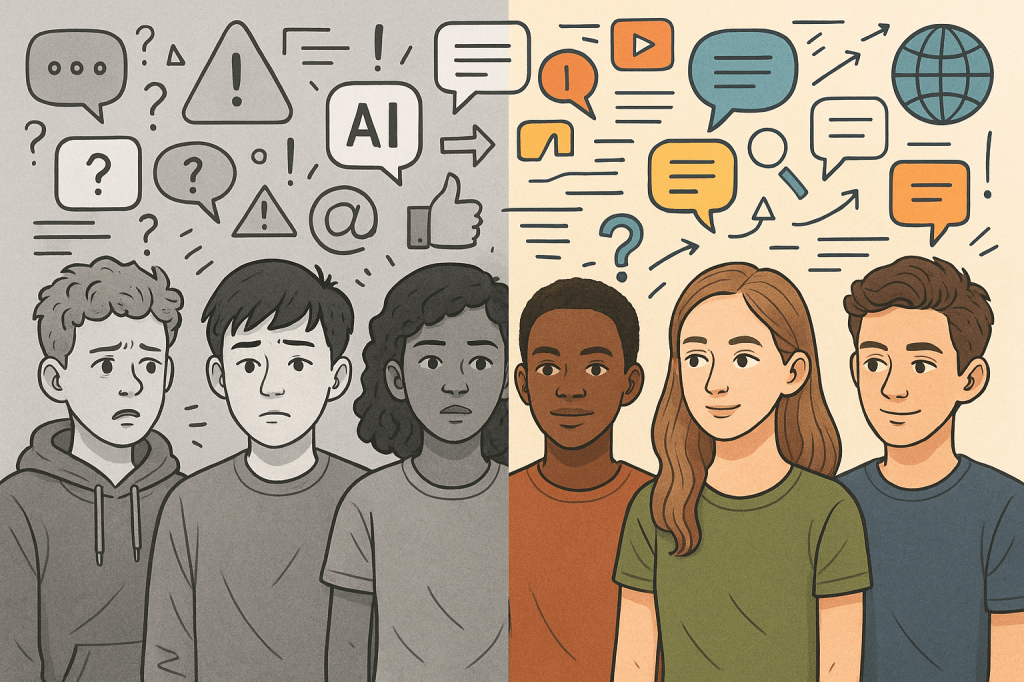
We live in a world where information shows up constantly, on our feeds, in videos, and even in comment threads. Some of it is truthful, some misleading, and some delivered with a deliberately factual, persuasive style. That’s why teaching our children to think critically isn’t just a good idea. It is absolutely essential.
When do we start? Critical thinking doesn’t have to wait until high school debates or college essays. It begins the moment a child starts asking “why.” In Pre-K, teaching critical thinking skills through guided questions leads children to think about choices “Why do you think that block tower fell down?”, characters’ feelings “Why do you think she’s sad?”, or even behaviors “What choice could you have made instead of kicking him?”. Over time, the questions grow deeper, but the foundation is the same: encouraging curiosity and supporting reflection and wonder.
Simple strategies for everyday life:
- Ask open-ended questions: Rather than yes/no, try: “What do you think will happen next?” or “Why might someone believe that?”
- Encourage comparison: “How is this idea like one we saw before? How is it different?” Homeschool and other educators use Venn diagrams for this all the time.
- Model the process of thinking for your children: Talk aloud: “I saw two news stories. One had data and named sources; the other did not. Which seems more trustworthy?” With older kids, do a Google search for both versions of the story and see what research and reliable sources turn up.
- Use media thoughtfully: Pause during a video or ad and ask: “What’s the message? Who made this? What are they trying to persuade people to think or do? Why?”
- Celebrate mistakes: Don’t immediately celebrate your child seeing an error in thinking with “See? I knew that was bad information.” It is important to let children see that being wrong or misguided isn’t failure, it’s a step toward better reasoning.
Why does it matter to learn discernment now more than ever? With social media, AI tools, and algorithms competing for attention, children are constantly exposed to persuasive messaging. Without critical thinking, it’s easy to accept misinformation, fall for persuasive appeals, or conform without question. Young people need to know how to analyze, question, and confidently stand firm in their own conclusions.
Critical thinkers grow into independent thinkers. They not only evaluate information, they form their own views, even when those views differ from the crowd.
Recent studies suggest real risks when we rely too heavily on AI. For instance, a 2025 study showed a negative correlation between frequent AI tool use and critical thinking ability, mediated by “cognitive offloading” (letting the machine do the thinking for you). Gerlich, 2025. Another review warns that AI hallucinations, algorithmic bias, and over-reliance have consequences for decision-making and reasoning skills. Zhai et al., 2024.
Know when to guide, when to listen: As parents, we can’t always “correct” or lecture without resistance. There’s a time and place for influence, but too often, in the moment, what our child needs most is space for them to voice their ideas. Asking leading questions “Why do you think she acted that way?”, listening without immediate judgment, and resisting the impulse to deflect or shut down their perspective opens the door to real thinking. As teachers, we don’t lecture either, but we scaffold with questions that build on each other. Children do not need to form opinions or have answers immediately. They need space and time for their young brains to begin making connections that may seem obvious to adults.
We aren’t just helping kids absorb facts. We’re helping them build a mindset: how to weigh evidence, spot bias, and choose thoughtfully. Those are skills for school, for online life, for relationships, and for a future that’s not yet written.
A final thought: Critical thinking is like a muscle. The earlier we start exercising it, the stronger it becomes. In this era of rapid change and digital persuasion, giving our children the confidence to ask “why” may be the greatest gift we can offer.
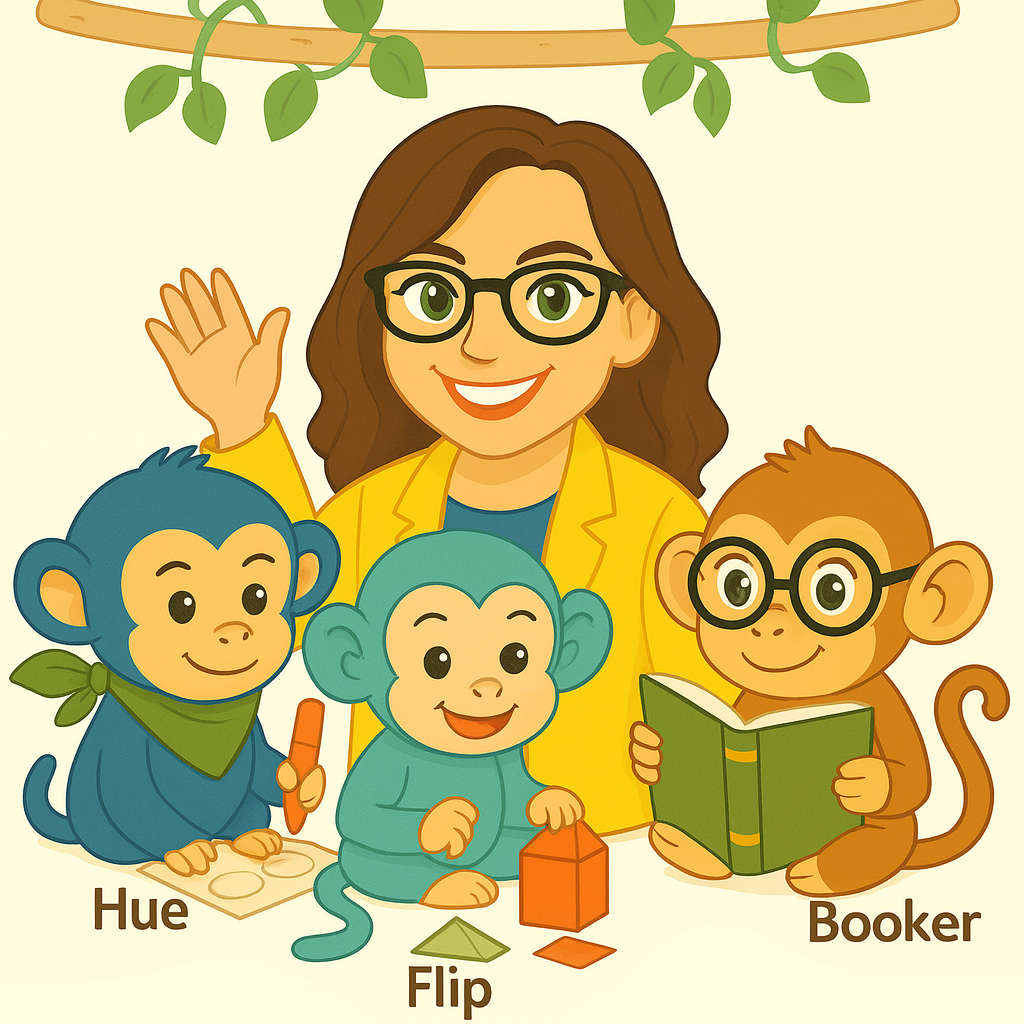 About Chrissi: Hi, I’m Christina “Chrissi” Dennis, B.Ed., M.A. (ABA). I’m a teacher, writer, and creator of Monkey Buddies Activities and books. I’m passionate about helping kids grow, supporting parents, finding and nurturing our villages, and creating a healthy balance between classroom life and family life.
 Chrissi Dennis and Monkey Buddies
Leave a comment