Welcome back to my little corner of the creatorverse.
The last two weeks, I’ve spent more planning time than I’d like trying to squeeze a real Pre-K classroom into an official planning template. The PreK program in the county I work in is being audited this year. Certain specific items need to be present and perfect in a lesson plan, one from each PreK classroom in the county, for that audit.
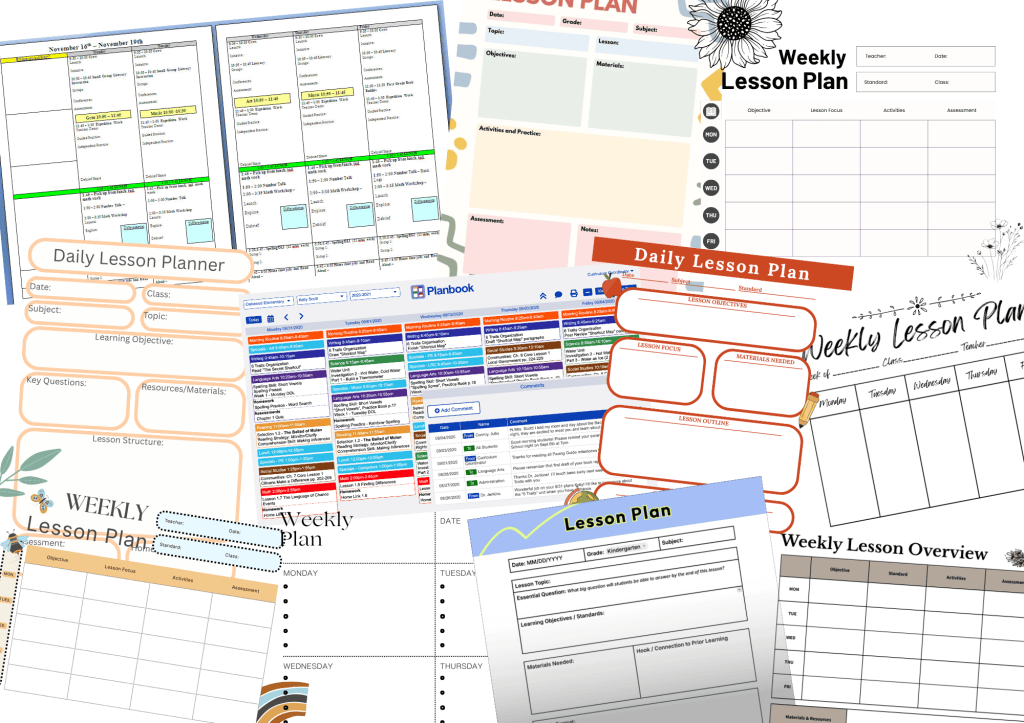
On paper, the formal PreK lesson plan template makes sense, and I have been using it in my classroom. There are spaces for the study, question of the day, large group, read-aloud, choice time, small group, individual instruction, notes, and standards. All of that sounds fine.
But for this audit, it needs to reflect what the auditors believe should be happening on a daily basis in the classrooms.
That doesn’t sound unreasonable, but it isn’t realistic in a classroom with 14 children, three children with level three autism, four in diapers, one 3 year old, two big behavior challenges, and kids whose theme this year is ‘we don’t want to listen.’ Oh, and one teacher and one assistant.
End of rant about the audit’s disconnect from reality and on to reality.
Let’s talk PreK lesson planning. We are always given a curriculum to use and often that curriculum is not realistic. We are dealing with children who are mostly four and five, with the occasional three year old child with autism or sever speech deficits. So back to the plan on paper. Although I could make do, the county format doesn’t meet my planning needs so it is filled out to the satisfaction of the powers that be, after I am done completing my regular plan. Then both go in my binder where I store past lesson plans.
My format follows my schedule, it follows the seasons, it follows the holidays. These are important and relatable to small children. Then I pretzel the curriculum into something that satisfies everyone. But children first.
I love using PlanBook for my physical plans. Matching my real schedule means the activities show up under the time blocks when they actually happen. The small-group stations need to match materials we have in the room. Individual instruction needs to reflect specific learning goals for students. Contrary to the county’s desired lesson plan appearance, I small group the kids with similar goals and skills, and then work individually with students on IEPs. I meet the county requirements by creating small groups that meet individual needs for each child.
Our recent study focused on weather, leaves, changing daylight, and seasonal vocabulary. For read-alouds, we used weather books and The Leaf Thief. In small groups, the children worked with pattern blocks, Play-Doh mats, name stamps, alphabet locks, tracing activities, scavenger hunts, and upper- and lowercase matching.
None of those activities were picked just to fill space on a form. Each one had a purpose, and the same activity could be adjusted depending on the child.
One child might be learning to make intentional marks or recognize the first letter in their name. Another might be building their whole name independently. One child may need practice sorting by one feature, while another is ready to describe a pattern or explain what comes next. Some children need direct support with grasp, communication, transitions, or simply staying in one space long enough to complete an activity.
A useful lesson plan should do more than satisfy the person checking that it exists. It should help the adults in the room understand what we’re doing, where materials go, which skills we’re watching for, and how an activity can be adjusted without reworking the whole day, while also leaving room for reality.
A child might get fascinated by the veins in a leaf, which turns into why the leaf is turning yellow. At this point, whatever activity filled the science slot for that day goes by the wayside and becomes a lesson in the life cycle of the leaf from budding to falling off the tree. That may lead to deciduous vs. coniferous trees, and maybe some leaf collection on the playground and rubbings over paper to pick up the pattern with a crayon. Then, how is the best way to hold the crayon? Flat or in a pincer grasp. I could go on and on, but I think you get the point. None of that was on today’s lesson. But today’s evolved lesson was way better than anything I could have written up. The small block of time for simple four and five year old science becomes a whole day of discovery.
Did my plan fail? I’m not even going to answer that. :)
The resources I create for The Learning Lab often follow the same pattern. An idea becomes something with legs and follows an unexpected path. I often write recourses for a certain grade but then expand or alter them to fit multiple grade levels. In my imagination I see a fifth grade teacher purchasing from my TPT and being able to share with other grade level teams in the school.
A worksheet, activity guide, or small-group lesson should make teaching easier to understand and easier to carry out. It should give enough structure that someone knows what to do, but not so much that the directions become more complicated than the activity itself. Flexibility is key.
Teachers are already carrying the schedule, standards, materials, individual goals, behavior supports, transitions, and unfinished activities from the day before. A resource shouldn’t add a bunch of extra paperwork and additional time to their day.
So, I will present the required county planning template. I’ll make it accurate, readable, and as engaging as possible. The boxes can help organize the week and show how the pieces connect.
But those plans should not be mistaken for the realities of teaching.


Leave a Reply